

The meaning of the old adage ‘Write What You Know’ is often discussed by writers. But what does it really mean?
Does it mean you write what you know and nothing else? And how does what you know turn into a compelling story? Is it really such a wise saying?
Read on to find out how to use ‘Write What You Know’ to your advantage.
How can ‘Write What You Know ‘ help my writing?
If, for instance, you just stick to writing what you know, your writing would lack a lot. You would be excluding yourself from writing about, i.e.: being a pilot, a horse jumper, an astronaut and many other things that you are not!
So therefore, if you took this adage in the literal sense, it would totally limit what you write about.
On the other hand, if you focus on life experiences and what they have taught you, you then have a vast array of knowledge, experience and circumstances to write about.
So it’s by tapping into your personal emotional truths that you will find a well of experience to write about. This is writing what you know.
How to Tap into Writing What You Know
I’ve thought about this adage for years, always feeling there was a message in it that I needed to comprehend.
So from following my thoughts on this subject, I have shared below what I came up with. And through sharing it, it has also evolved into a writing exercise that may help you explore your inner world of thoughts. And in turn help you to find your stories. The ones you really want to write.
So could you write a story, not about you and your experience, but how a character that you create, could have lived an experience – that you experienced?
This is writing WHAT YOU KNOW!!

Exercise: ‘Write What You Know’
Think about what has affected you most in life.
- What circumstances in your life’s journey have you encountered that impacted your life?
- What experiences have brought you joy?
- Is there a repetition of events in your life that effect you today?
- What experiences have brought you sadness?
Answer each of the above questions in your journal or on your computer. Use bullet points, don’t go into detail at this stage.
What else have you experienced in life?
- Betrayal?
- Injustice?
- Effects of natural disasters?
- Crime?
- Illness?
- Addiction?
- Unrequited Love?
- What else?
Now pick one of the above from your list. Sit quietly and think deeply of that place and time in your life, and then write about it. Write a few paragraphs, or a page, even a few pages. Put all the emotion into it that you can feel. Don’t hold back, you are writing this for you, not anyone else, keep writing.
When the writing is completed, you will then understand that you KNOW about your given experience. You KNOW what it felt like. You KNOW what you went through. You KNOW how you coped and how you did not cope. And you were able to communicate that through words on the page.
And because you have first-hand experience of the event, and the FEELING of that event, you will be able, through your choice of language and words, communicate in depth this feeling, because you experienced it, you know about it in detail.
As a further exercise, you can translate this experience and feeling onto a character in your story. And you can embellish it as deep as you want.
Because you now know how to WRITE WHAT YOU KNOW!
Writing what you know is also a part of writing Autofiction. If you would like to learn more about Autofiction, view more details HERE
Sin a bhfuil anois.
Gaeilge for: That’s it for now
Go Write!
Irene G.
Want a helping hand and guide to put this into practise?
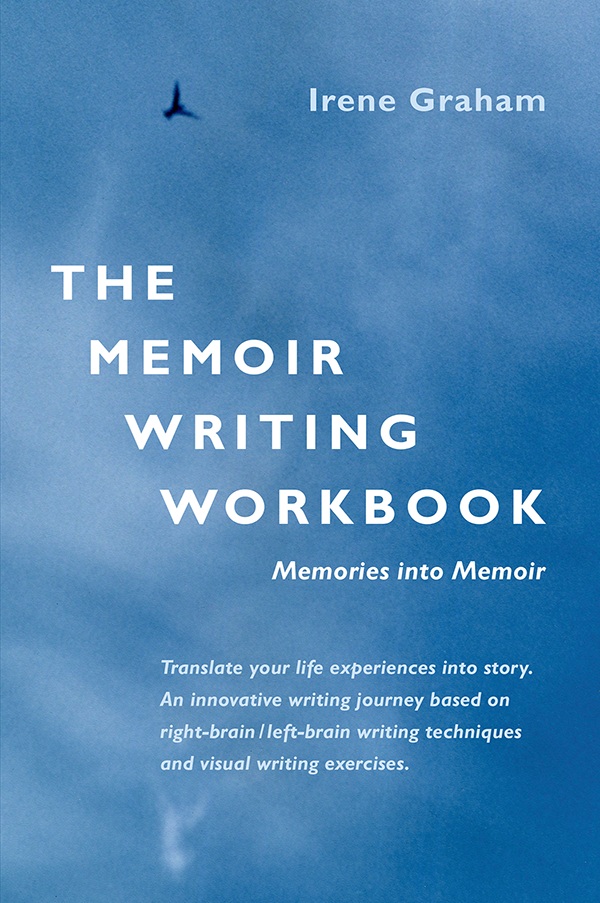
The Memoir Writing Workbook (240 pages) is based on right-brain/left-brain visual writing techniques. It has 36 multi-part focused exercises and 45 writing tips to help trigger memory and learn story creation. Each chapter with examples, show how to develop and write memoir, using the unique Memoir Map.
Do join Irene for a FREE LIVE Chat on How to Start a Memoir Writing Club
Or join Irene in her 12-week Online Memoir Writing Course or on one of her Writing Retreats
Check out Irene’s Writing Voice Courses - Downloadable PDF's
Join Irene's Blog
Get occasional writing tips, updates and news from Irene Graham and The Memoir Writing Club, straight to your inbox.